
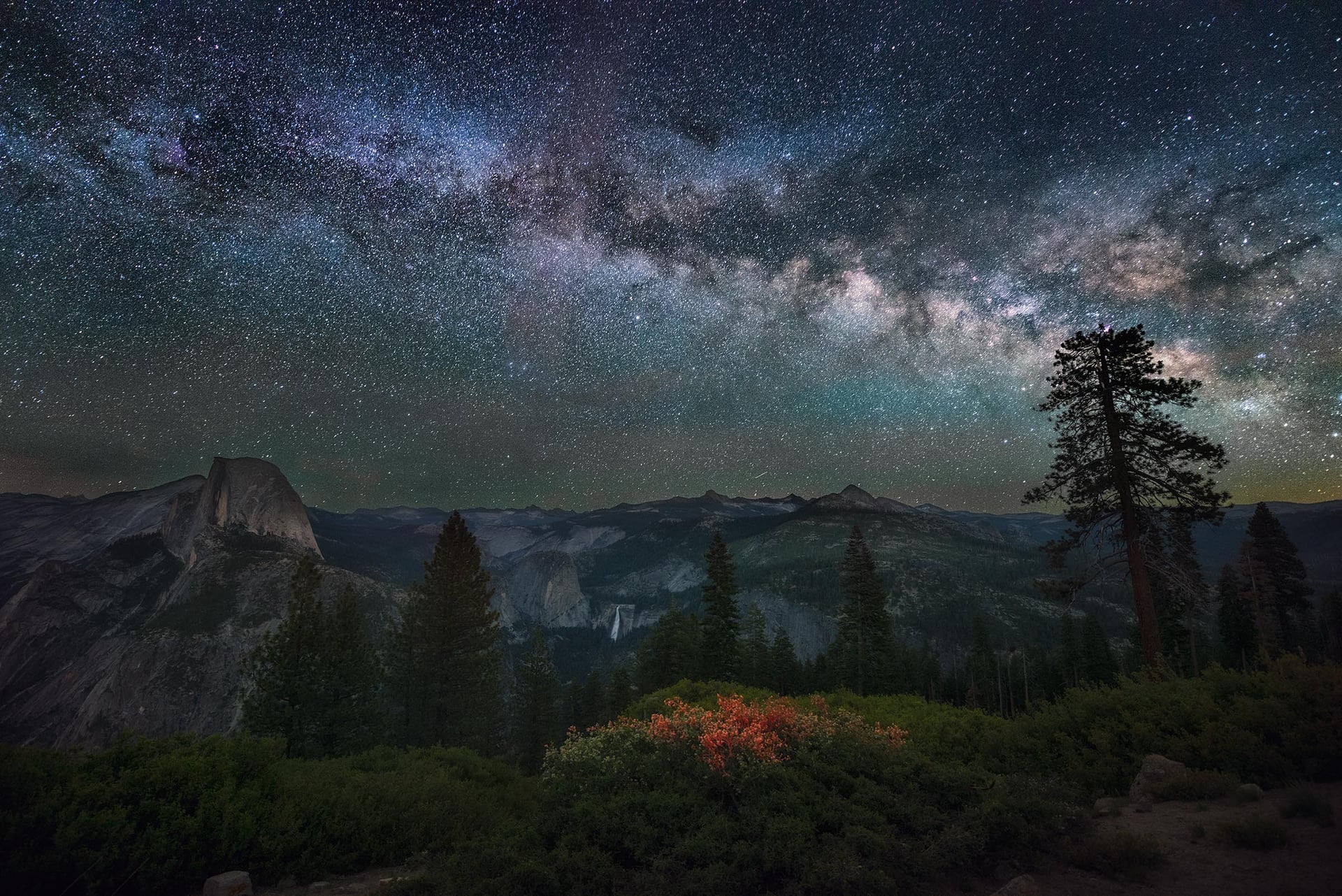
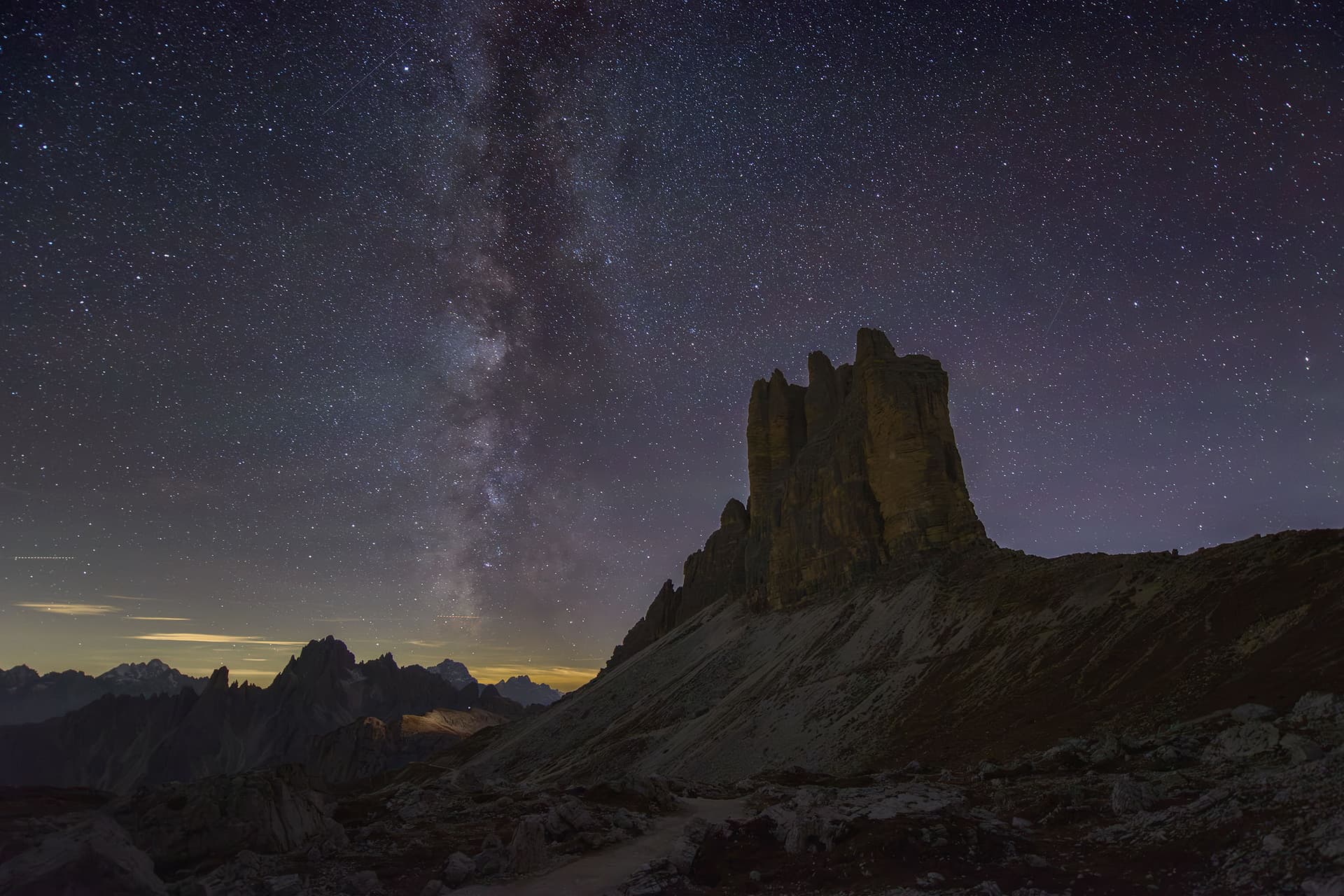
The core season for Milky Way photography runs roughly late winter through early autumn, but which specific nights are worth losing sleep over depends on where the moon is and how clear the sky is likely to be. This Milky Way planner works that out for one location at a time: search a place or click the map, and see a full year rated night by night, plus which months are typically strongest before you even pick a year.
Every night's rating combines how long the core sits above a usable altitude in true astronomical darkness, how much moonlight is in the sky during that window, and, inside the next 14 days, the actual cloud forecast. A built-in star trail exposure calculator uses the NPF rule to work out the longest shutter speed your specific lens, aperture, and sensor can handle before stars start to trail.
Timing is only half the problem, the sky itself has to be dark enough to see the core's faint dust lanes in the first place. Toggle the built-in light pollution map on the search map below to see estimated sky glow for any region, so you can judge how far you actually need to get from a city before deciding a location is worth the drive.
Loading planner…
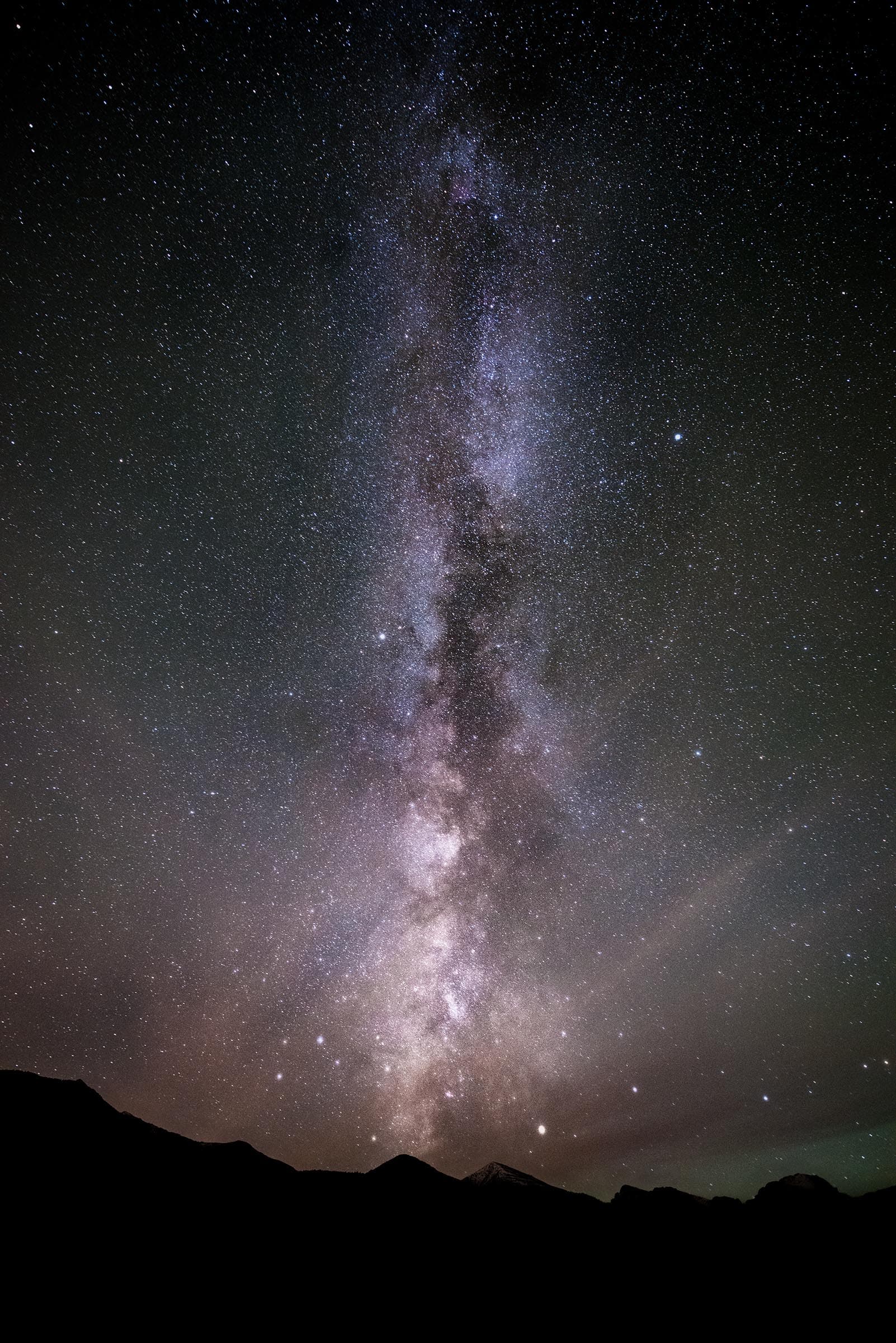
From late winter through early autumn, the core of the Milky Way, the brightest and most photogenic stretch of our galaxy, climbs high enough into a dark sky to be worth planning a trip around. Its position shifts night to night and hour to hour. Early in the season it only clears the horizon just before dawn, by the height of summer it sits high for most of the night, and by early autumn it sets not long after dusk. Southern Hemisphere locations, Chile, Namibia, and Australia among them, often get an even better view than sites north of the equator, the core rides higher and stays up longer in the southern sky.
None of that matters much if the moon is up. A full moon washes out all but the brightest stars the same way a streetlight ruins a long exposure. The nights worth driving for are the ones where a dark, moonless window overlaps with the core's highest, longest stretch above the horizon, and where the sky itself is dark enough to show it. That overlap is what this planner works out for you, one location at a time.
Use the exposure calculator above to find your own max shutter speed before stars start to trail, it accounts for your specific lens, aperture, and sensor rather than one number for every setup. A few techniques go further than any single setting from there: blend a longer, brighter foreground exposure, shot at blue hour or lit briefly with a headlamp, with a shorter sky exposure so both are properly exposed. Stack several identical sky frames and average them to cut noise without lengthening any one exposure past the trailing threshold. Stitch a panorama across the core for a wider, higher resolution result than one frame alone.
Foreground matters more than the sky does. A silhouette, a lit tent, or a rock formation with some texture gives the eye somewhere to land before it reaches the core. A cheap headlamp on its lowest setting, held off to the side for a few seconds during a longer exposure, usually beats dedicated light painting gear.
Get away from town. Light pollution washes out the faint dust lanes in the core long before it dims the brightest stars, which is exactly why the dark sky destinations above are worth the drive. And bring a second battery, cold nights and long exposures both drain them faster than daytime shooting ever does.
Why I Built This
Most of my time in the field goes to sunrise and sunset, but some of my favorite nights are the ones I stayed out long after the light was gone. There is a particular kind of quiet under a dark sky, looking up at the core of our own galaxy and thinking about how small this planet, and all of us on it, really are.
The hard part was never wanting to shoot the Milky Way, it was knowing when. Planning a trip months out, it is not obvious which month is actually best for a given location, or how that changes once the moon gets factored in. I built this planner to answer that question the way I wished I could when I was planning my own trips, one location at a time, month by month.
More About MeThe rating weighs three things together: how long the galactic core is above the horizon in true astronomical darkness, how much moonlight is in the sky during that window, and, inside the 14 day forecast range, how much cloud cover is expected.
Weather forecasts are only reliable about two weeks out. Nights beyond that show a rating based on moon and core position alone, the same way the rest of the year is planned.
Distances and categories are pulled from DarkSky International's public list of certified parks, reserves, sanctuaries, and communities, matched against the location you search.
Toggle "Show light pollution" and the map overlays estimated sky glow, modelled from satellite brightness data, so you can see how far a location actually is from a city's glow before you commit to the drive. It's one estimate, not a substitute for checking conditions in person, but it narrows down candidate locations fast.
It uses the NPF rule, which factors in your aperture, focal length, and how tightly packed your sensor's pixels are. That replaces the older 500 rule, which ignores resolution and tends to overstate how long you can expose on modern high megapixel cameras.
No account and no payment, the full year calendar for any location.
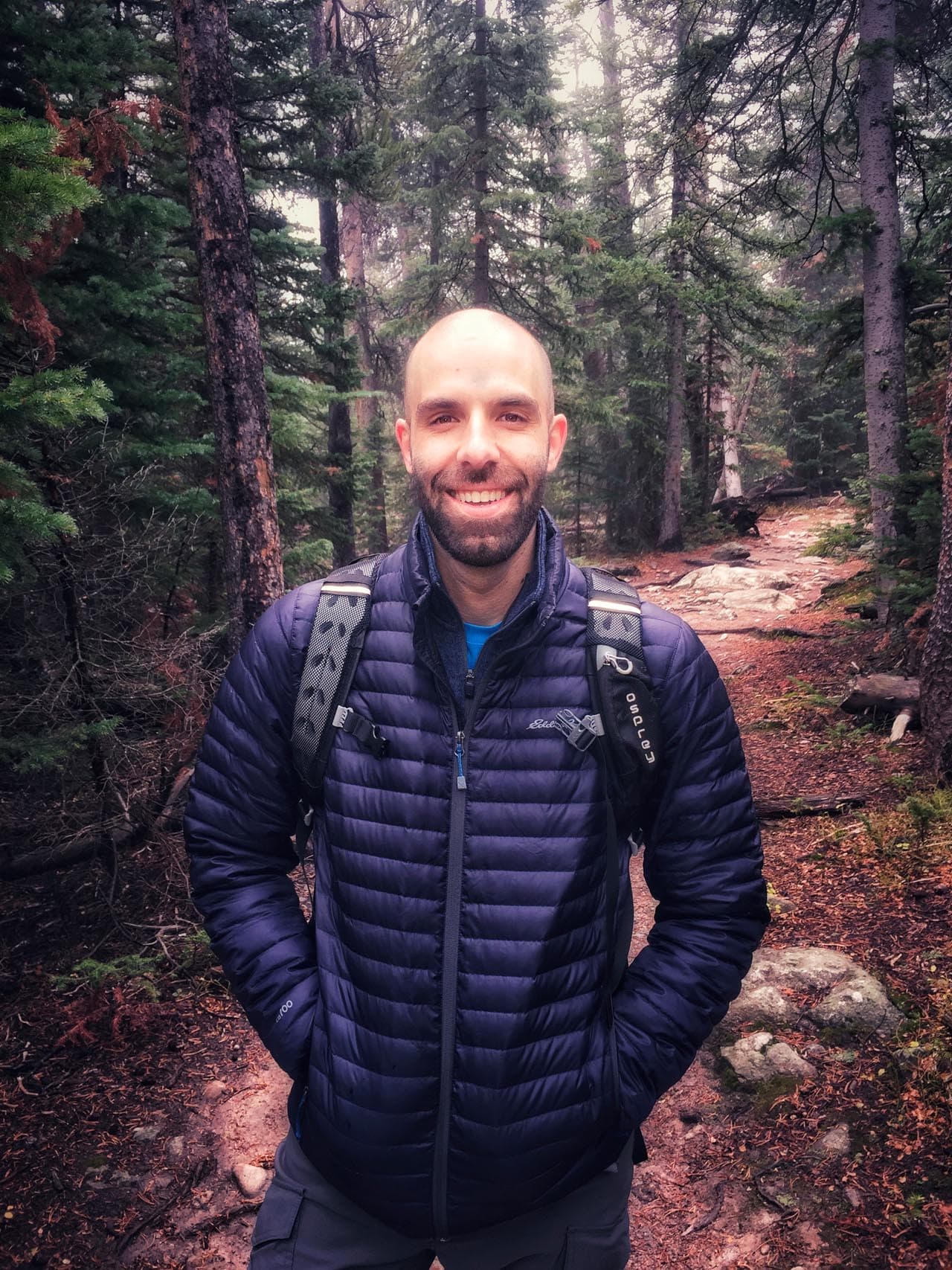
I'm Brent Goldman, a landscape and nature photographer selling limited edition fine art prints. For the light before dark, the sunrise sunset forecast tool scores a specific date, and the golden hour & blue hour trends tool maps a whole year at once.
Found a bug, have feedback, or want to see a new tool?
The Milky Way Planner is one of a handful of free tools I've built for photographers. Let me know what worked, what didn't, or what you'd like to see built next.
Get in TouchNew limited edition prints are released a few times a year, and this is also where new tools and updates to existing ones get announced. Join the list to hear first.
Limited edition fine art prints from nights planned exactly this way, on gallery acrylic and FujiFlex paper, with free shipping in the US.